Showing posts with label michigan. Show all posts

Wednesday, July 11, 2012

A Shocking Sight In Downtown Detroit: People - Forbes

A Shocking Sight In Downtown Detroit: People - Forbes


A Shocking Sight In Downtown Detroit: People

Merchant's Row, Detroit downtown
Merchant's Row, Detroit downtown (Photo credit: Wikipedia)
Editor’s Note: This post kicks off a new special section called “Reinventing America,” which we launched Tuesday. As part of this effort, more than a dozen Forbes contributors and staff writers will focus attention on the challenges facing towns, cities and traditional industries across the nation–and highlight the growing number of success stories we’re seeing, too. Over the coming months we’ll have stories, rankings of who’s doing it right (and wrong), and, we hope, great conversations with readers, so please join in. It kicks off with this dispatch from our Detroit Bureau Chief, Joann Muller:
The city of Detroit is on the brink of insolvency. So why is it that I’ve never been more optimistic about its future?

But all you have to do is visit Woodward Avenue, the spine of Detroit’s central business and cultural district, to see that something quite encouraging is happening. Woodward used to be Detroit’s Fifth Avenue or Broadway, a thriving retail and entertainment district anchored by the old Hudson’s Department store and the famous Fox Theatre. By the time I moved to Detroit in the late 1980s, all that was gone, and Woodward was a Ghost Town, just one more of those scary, abandoned places you didn’t go in the Motor City.A year ago, I wrote a Forbes cover story, Detroit: City of Hope, which included a conversation with many of the city’s movers and shakers about the challenges of trying to reinvent the Motor City. The headlines since then certainly have been discouraging, at least on the government side. Mayor Dave Bing has been a disappointment and he and the do-nothing City Council can’t seem to agree on anything. Meanwhile, the city’s top lawyer is dithering in court to void an agreement with the state of Michigan for a financial oversight board. The political gamesmanship is probably just delaying the inevitable, which is either the governor’s appointment of a slash-and-burn emergency financial manager to run Detroit or a municipal bankruptcy filing, or both.
But not long ago, I found myself driving up Woodward on a Tuesday afternoon, and I was shocked — shocked — to see dozens of pedestrians strolling along the street. They were soaking up the sunshine at outdoor cafes, or taking a break from work at one of the downtown office buildings to stretch their legs or run errands. In any other city, this would be unremarkable. But in Detroit, it was an amazing sight. Seriously.
Friends who work downtown marvel at the number of people they see riding bikes or walking dogs in the neighborhood. They joke that joggers are running for exercise, not out of fear.
People are moving back to the city’s core. Yes, Detroit lost about 25 percent of its population in the past decade, but young professionals are moving in, lured, in part, by cash incentives offered by some of the city’s largest employers, who have added an estimated 10,000 jobs downtown in the past 18 months.
A year ago, five companies — Quicken Loans, Blue Cross/Blue Shield of Michigan, Compuware, DTE Energy and Strategic Staffing Solutions — pledged more than $4 million to help employees offset the cost of buying, renting or renovating a home in the downtown area. The program was modeled after a similar one a couple of miles to the north, in the area known as Midtown, home to big employers like Wayne State University, the Detroit Medical Center and Henry Ford Hospital. Both programs are part of an effort by these so-called “anchor institutions” to attract 15,000 talented young people downtown by 2015. So far, nearly 500 people have taken advantage of the two programs, with many more applications under way.
The problem now is there aren’t enough apartments for all the people who want to live downtown. But that’s attracting more developers who are remodeling old buildings and creating loft apartments as fast as they can.
Restaurants and nightclubs are multiplying, too. I was at a friend’s bar over the weekend and was delighted as he rattled off all the development activity going on in his neighborhood, where the only other business currently is a strip club.
As I listened to him talk about the new steakhouse opening soon on the corner, and the buildings being rehabbed down the block, I was struck by the fact that entrepreneurs and large employers, too, aren’t waiting for Detroit to solve its fiscal crisis. They sense that Detroit’s on the cusp of a rebound and they want to get in on the ground floor, while it’s still cheap. Even Twitter is opening an office downtown.
andy Baruah, president of the Greater Detroit Chamber of Commerce, confirmed it. “The way business is looking at it, the political struggle in Detroit is not new. It’s been an issue for as long as anyone can remember,” he said. So the threat of a fiscal collapse isn’t deterring their investments.
“There is an article of faith going on here,” he said. “We know it’s not going to be pretty. But the fundamentals, the basic assets in Detroit, are strong enough that it’s worth it, especially when prices are so low. At the end of the day we know there will be a city. It will find a way.”

Friday, July 6, 2012

Jay Walljasper: Young, Talented-- and Living in Detroit

Jay Walljasper: Young, Talented-- and Living in Detroit


Declining, desperate Detroit is old news.
It's not that the city's economic woes, struggling schools, racial friction and crime have been magically solved. A glance at local headlines will tell you that.
But there are new stories to tell about Detroit today. Which doesn't mean the old stories are all wrong -- just that they're not the whole story anymore.
In recent years, for instance, Detroit has become a magnet for ambitious young people. Some grew up in the area; some move in from the coasts or other parts of the Midwest. Many are motivated by idealism or a sense of adventure, seeking to play a part in reviving a Great American City. Others, however, simply see an opportunity to fast track their careers.
You see them everywhere -- sporting events downtown, galleries in Midtown, pubs in Corktown, restaurants in Southwest, music clubs in Hamtramck, sidewalks on the East Side, soccer fields at Belle Isle park, vegetable stands at Eastern Market. But a lot of people inside Michigan and out still don't know about it.
This new story is exemplified by the Detroit Revitalization Fellows Program (DRFP), a Wayne State University project that connects rising mid-career professionals to organizations at the forefront of efforts to boost economic development in the city. Initiated by Wayne State Associate Vice President Ahmad Ezzeddine in partnership with the Kresge Foundation, the Hudson-Webber Foundation, the Ford Foundation, and the Skillman Foundation, the project drew inspiration from a fellowship program in post-Katrina New Orleans. A wide majority of the 25 New Orleans Fellows stayed in the city after the program concluded, notes DFRP Executive Director, Dr. Robin Boyle -- a nationally known planning professional who chairs Wayne State's Department of Urban Studies and Planning.
"I still marvel over the fact that we had almost 650 applicants from across the country apply for 25 positions -- the opportunity to come to Detroit," says Rachele Downs, the DRFP Program Manager and a veteran commercial real estate broker. "These are people who are graduates of some of the best schools in the country with equally impressive professional experience."
In the end, 29 applicants with backgrounds in fields spanning real estate, finance, urban planning, entrepreneurship, law, accounting, health care, civil engineering, community organizing and tourism development were selected for two-year fellowships. On top of stellar credentials, the fellows offer a unique world of experiences. Brian Connors is still co-owner of a cafe he founded in Beijing. Felicia Andrews managed economic development projects for the African Union. Beau Taylor managed economic reconstruction projects in the midst of the Iraq and Afghanistan wars. Abir Ali designs eco-friendly furniture. Marcus Clarke published a book about spirituality and hip hop music. Sarida Scott Montgomery runs a gourmet popcorn shop in downtown Detroit. Michael Forsyth worked on a GM assembly line.
The fellows -- 16 women and 13 men -- range in age from 25 to 42, with more than one-third being people of color. Seventeen fellows grew up outside the Detroit region and 12 had no previous experience living in the area, while seven of the locals were working outside Michigan when they were chosen for the program.
One of the homecomers, Allyson McLean, 28 -- who worked as a strategic planner for a D.C. consulting firm -- rejoices at no longer being part of the Detroit brain drain. "I'm frustrated with how many people have given up on Michigan," she says. "Most of the kids I went to school with are now gone. They hear gloomy stories about Detroit and don't even try to find a job around here." McLean is now working to bring new businesses and jobs to low-income neighborhoods at the Community Investment Support Fund.
Each fellow has been hired fulltime for at least two years at an organization DRFP has identified as being "actively engaged in building the Detroit of tomorrow." Off the job fellows participate in intensive sessions in leadership development and executive-level education in one of three areas: real estate development, project management or placemaking. Twice yearly they take road trips to examine urban revitalization best practices in other cities.
The employers run the gamut from the city's purchasing department to the Tech Town business incubator to Data Driven Detroit, a nonprofit offering the latest information and analysis on conditions in Detroit. Boyle notes, "Almost all these organizations have hired fellows for projects they would not necessarily be able to execute were it not for the talent the program was able to recruit."
Celeste Layne, for example, previously launched bike and pedestrian projects in the South Bronx and Harlem for New York's Department of Transportation. She is now applying her skills on the streets of Detroit with the East Jefferson Corridor Collaborative. "My vision is that we need better links to the Riverwalk, a bike lane protected from motor vehicles and a combination of good traffic flow and lively street life," Layne says.
"Celeste has made a big difference," says her boss Josh Elling, executive director of the Jefferson East Business Association. "She's had a dramatic effect on the scope of our work."
While not even a year old -- fellows first met one another and reported for work last August -- the program is already realizing one of its chief goals: fostering closer cooperation among groups working to improve Detroit's economy and civic culture.
Jean Redfield, vice-president for public programs at Next Energy, a non-profit that works with the city on sustainable energy technologies, says, "The fellows program is having a positive effect on the tendency for organizations to collaborate; their informal network results in getting things done when the traditional methods of interaction -- meetings or calling people up whom you don't really know -- are too slow or don't work at all."

Thursday, April 5, 2012

Thinking Outside the Cube - My Jewish Detroit

Thinking Outside the Cube - My Jewish Detroit


Brandon Pomish: Proud of Detroit


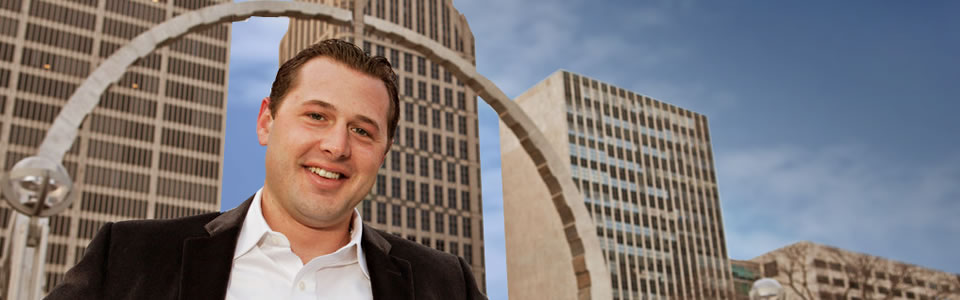
Thinking Outside the Cube  - MEET BRANDON POMISH, 29, BUSINESS DEVELOPMENT AT PCI ONE SOURCE CONTRACTING, COMMUNITY BUILDER, JEWISH DETROIT POWER SOURCE

Building Detroit: One Project and One Click at a Time


While the commercial construction industry in Michigan has been hit hard, PCI One Source is weathering the storm.  Business Development Director, Brandon Pomish explains that the success of his family business  is all about adaptation to change, community spirit…and connections. Active on all fronts of Greater Detroit’s rejuvenation, Brandon’s connections to Jewish Detroit include the Federation YAD (Young Adult Division)  Board, the YAD Entrée Program & Events Committee, Federation Capital Needs Committee, Federation Security Committee, the Board of Trustees at Temple Israel and Partners In Torah at The Yeshiva.

On what inspired him to get started

“My wife Emily and I had a conversation about two lifestyle options when we got married.  We could come home every night, cook dinner, talk about our day, watch Jeopardy, and read about what’s going on in the community. Or, we could become actively involved and start rebuilding young Jewish Detroit to again become the prosperous community that it once was.  We chose to put our energies into Detroit.”

On how he’s making his mark on Jewish Detroit

“I live to work and enjoy the intensity of response necessary to adapt to change in adverse situations. I am proud to say that I work for my family’s business, a company deeply committed to the community. We believe in the future of Detroit.”

On his volunteer work

“I believe there are countless ways people can and do make a difference.  I’m often asked how I find the time to do what I do, and my answer is that I make the time because I’m passionate about building our community. If you’re passionate about something, time is only a function of how involved you want to be.”

On thinking outside the cube

“Our business is about building places where people can be productive and creative. I believe thinking outside the cube also sparks the kind of discussions that lead to inventive solutions for rebuilding Detroit.”

On choosing to move to Detroit or stay here

“We are a close-knit community.  One of our best kept secrets is that we have the strength and heart to embrace and support any path that you take, at any level of activity, be it social, professional, volunteer or philanthropic. The auto industry is on its way back and new and exciting industry and innovation opportunities are starting to emerge every day. Detroit isworking again, the destination of the future.”

On hopes or plans for Detroit’s future

“My hope for Detroit’s future is to regain its standing as a vibrant center for business, culture and social life.”

Reading now:

11/22/63  by Stephen King,  The Path of the Just (Mesillat Yesharim) by Moshe Cayim Luzzatto.

Favorite building in the Detroit skyline

“The Guardian Building. I think it’s one of the most beautiful buildings built in the last century. Just walk into the lobby, look up and be inspired. The architecture is just mind-blowing.”

Favorite restaurant

“El Barzon on Junction Street between Corktown and Mexicantown.  It’s a Detroit hidden gem serving both Mexican and Italian food.  Whichever way you flip the menu, you’re in for a good meal.”